MECHANICAL AND PHYSICAL TESTING
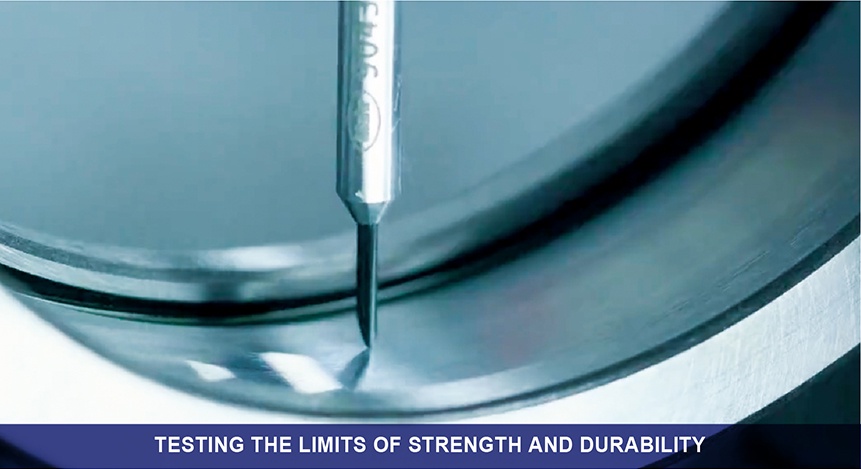
ut mechanical testing tells you what it can do. Mechanical testing provides quantitative evidence of how a material or component will behave under load, impact, or repeated use. From structural parts and fasteners to castings and weldments, mechanical properties directly affect reliability, safety, and customer confidence.
WHY MECHANICAL TESTING MATTERS
This test Confirms materials meet minimum strength and hardness requirements before service.
Validates heat treat results and manufacturing consistency Supports supplier qualification and ongoing QC programs Provides critical input for failure analysis and corrective actions Helps reduce risk in safety-critical or high-liability applications.
TENSILE TESTING
Tensile Testing Determine yield strength, ultimate tensile strength, elongation, and reduction of area for machined specimens, castings, weldments, and components to common standards
HARDNESS TESTING
One of the fastest ways to verify heat treatment and material consistency. Rockwell: All standard scales (B, C, etc.) and superficial scales (15N, 30N, etc.)
BEND & PROOF
LOAD TESTING
Bend testing for welds, fasteners, and raw materials, plus tension / compression proof load testing for nuts, threaded fasteners, and components
CHEMICAL ANALYSIS
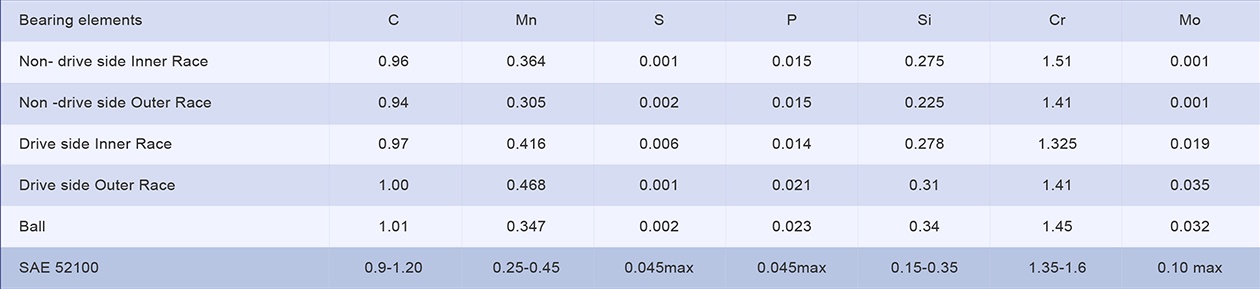
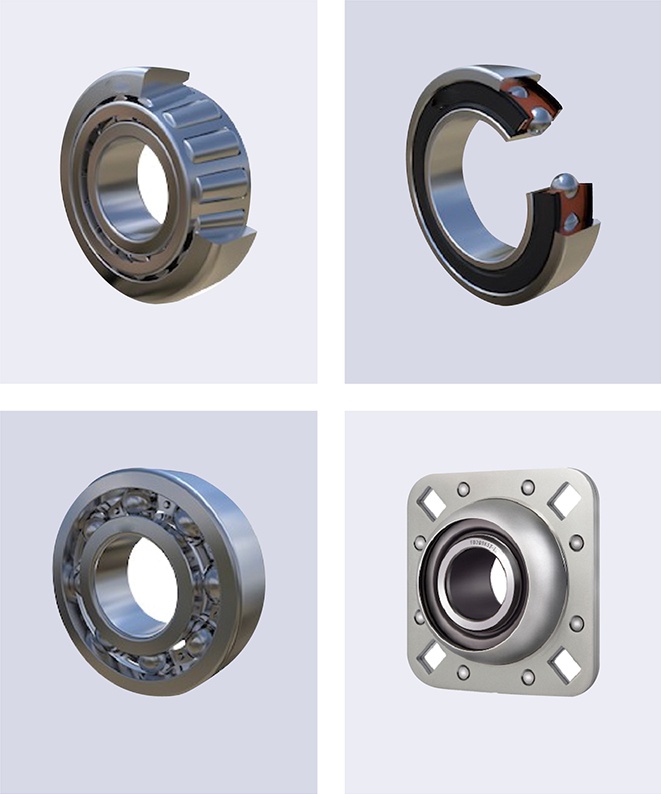
Bearing chemical analysis is a forensic metallurgical process used to identify the exact elemental composition of bearing components, lubricants, and wear debris. It verifies if materials meet specifications and diagnoses root causes of failure like corrosion, lubricant degradation, or chemical contamination. The primary industrial methods for bearing chemical analysis, typical material compositions, and analytical diagnostics used to detect faults depend on whether the metal itself or the lubricant is being analyzed.
KEY ANALYTICAL TECHNIQUES
JB Labs use specialized methods to inspect different components of a bearing assembly:
Optical Emission Spectrometry (OES) & ICP:
Tests the chemical composition of bearing metals (e.g., standard 52100 steel) to ensure they meet manufacturing specifications.
Scanning Electron Microscopy (SEM) and EDS:
Examines surface chemistry, wear deposits, and micro-contamination by identifying the exact elements of microscopic particles.
X-Ray Diffraction (XRD):
Measures material stresses, retained austenite levels, and detects microstructural changes caused by mechanical loading.
Lubricant/Grease Analysis:
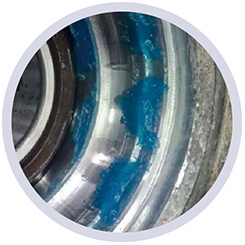
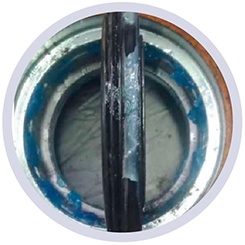
Tests oils and greases for additive depletion, viscosity changes, and oxidation byproducts (e.g., cold varnish).
WHY IT'S PERFORMED
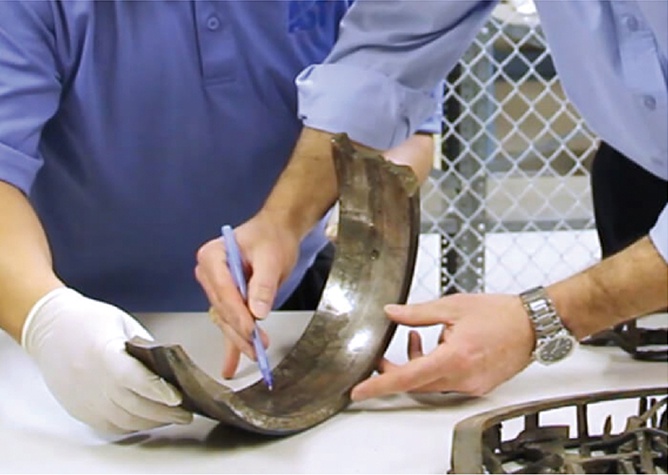
Root Cause Analysis: Determines exactly why a bearing failed (e.g., whether it succumbed to corrosion, fatigue, or electrical arcing).
Quality Assurance: Verifies material density, alloy ratios, and superficial hardness before installation.
Contaminant Identification: Detects external debris, abrasive particles, or chemical reactions on the raceway.
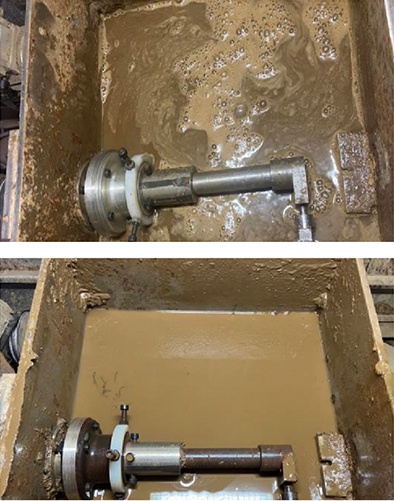
AGRI HUB UNITS MUD TEST COMPARATIVE TEST
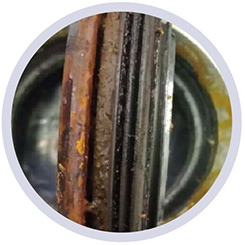
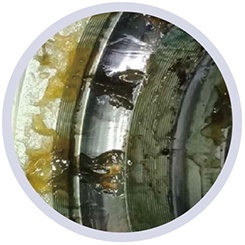
HUB JB001 has been found in good conditions at 700 hrs of Target Time and it has been decided to continu until to destroy every item due to high internal contaminations. JB product can fully meet the requirement of the 800 hrs mud slurry test and the product sealing performance reaches or exceeds the industry’s level.
LEAVE US A MESSAGE
If you have any questions, please fill out the form to contact us, and our customer service will reply to you within 24 hours!